Overview
Borobudur: A Masterpiece of Architecture and Spirituality
BOROBUDUR
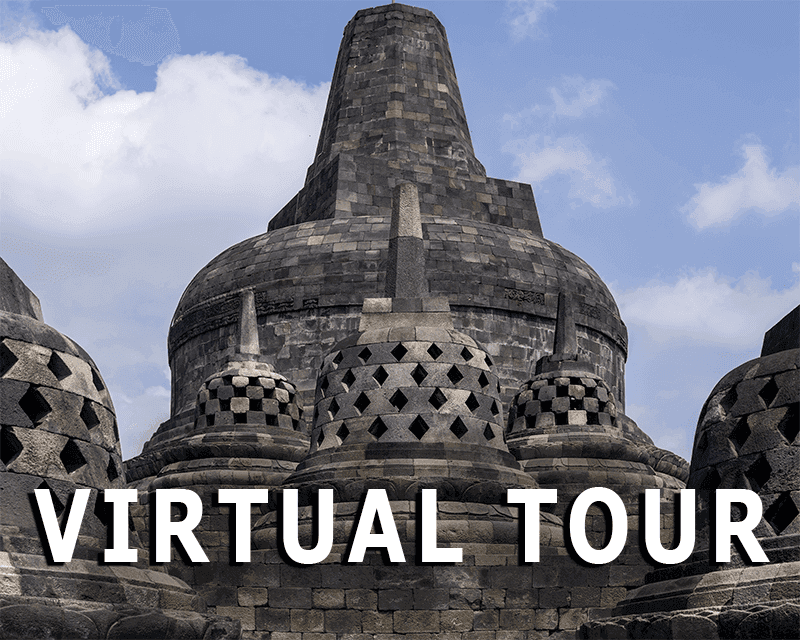
Borobudur, built in the 8th century in Central Java, Indonesia, is the world’s largest Mahayana Buddhist monument and a masterpiece of ancient Javanese civilization. Constructed entirely from over 2 million volcanic stone blocks without mortar, it features nine levels, 504 Buddha statues, 72 stupas, and more than 1,460 intricately carved bas-relief panels. Known as a "library carved in stone," Borobudur serves as a visual narrative of Buddhist teachings, offering timeless lessons in ethics, morality, and the path to enlightenment.
The monument is designed as a step-by-step spiritual journey, guiding pilgrims through teachings carved on its walls. Starting at the hidden base, the Karmavibhanga reliefs illustrate karma—cause and effect, consequences of actions—and form the foundation of ethical conduct. From there, pilgrims ascend clockwise, beginning at Level 1 with the Jataka panels, which recount fables from the Buddha’s past lives, teaching selflessness, compassion, and detachment. Also on Level 1 is the Lalitavistara, narrating the Buddha’s descent from Tusita Heaven to his first teaching, emphasizing the transformative power of Dharma.
On Levels 1 and 2, the Avadana panels expand the teachings to include stories of meritorious deeds performed by others, showing the universal reach of virtue. The most dominant teaching of Borobudur is found on Levels 2 to 4, where over 460 panels depict the Gandavyuha Sutra. This Sutra tells the story of Sudhana’s pilgrimage, emphasizing the interconnectedness of all existence, the value of diverse teachers, and the idea that enlightenment is a journey of benefiting others. The journey culminates at the upper levels, where stupas symbolize transcendence beyond material and physical realms, with the main stupa at the summit representing ultimate enlightenment—voidness and liberation.
Borobudur is more than an architectural marvel; it is a profound message carved 1,200 years ago by the ancestors of Nusantara. It remains a timeless guide for spiritual reflection, teaching the interconnectedness of life, the importance of virtuous living, and the boundless compassion required to achieve enlightenment. Through its stories and teachings, Borobudur continues to inspire and educate, bridging the past and present in its call for wisdom and compassion.
KARMAVIBHANGA
The Karmavibhanga, depicted in the hidden base reliefs of Borobudur, offers profound lessons on karma, emphasizing the law of moral causality and its impact on rebirth. Originated from ancient Sanskrit text it outlines the consequences of actions—good deeds lead to happiness and favorable rebirths, while harmful actions result in suffering and lower realms of existence. The reliefs vividly portray these teachings, making abstract concepts accessible through intricate carvings.
The moral of the Karmavibhanga lies in its call for ethical conduct. It underscores the importance of cultivating virtues such as generosity, kindness, and truthfulness while abstaining from harmful acts like stealing, lying, or violence. Even seemingly minor actions can carry significant karmic repercussions, reminding us that every deed shapes our future and impacts the world around us.
What sets Borobudur’s Karmavibhanga apart is its unique visual representation. The reliefs transform complex teachings into relatable narratives, demonstrating how individual actions influence not only personal outcomes but also society and the environment. This interconnectedness serves as a reminder of the ripple effects of our deeds, inspiring viewers to live responsibly and compassionately.
Although much of the hidden base remains inaccessible, historical photographs and the surviving reliefs provide valuable insights into ancient Buddhist teachings and the artistry of Borobudur. The Karmavibhanga stands as a timeless guide, urging reflection on the power of our actions and their role in shaping a just and harmonious existence.
JATAKA
The Jataka reliefs of Borobudur vividly portray the Buddha’s previous lives, presenting timeless teachings and moral principles central to Buddhist philosophy. These stories are more than ancient narratives; they are profound lessons on virtues that guide individuals toward enlightenment and liberation from suffering.
Generosity (Dana) stands as a cornerstone of the teachings, illustrated through the Bodhisattva’s selfless acts, such as offering his body to save a starving tigress, giving his eyes to a disguised god, and relinquishing his kingdom, wife, and children as Prince Visvantara. These stories emphasize that true generosity transcends material possessions and reflects compassion for all beings.
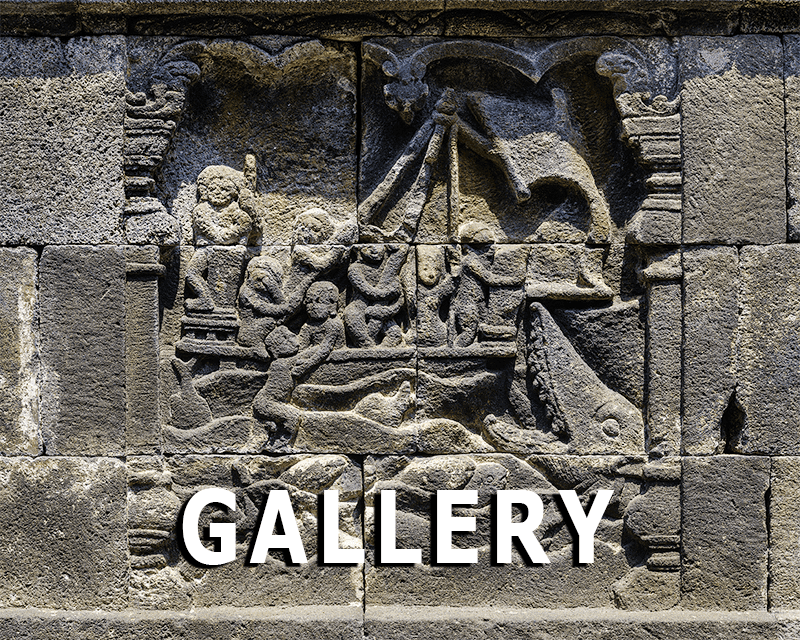
Truthfulness (Sacca) teaches the power of integrity and honesty, as seen in the story of Supāraga, the blind sea captain who uses truth and wisdom to guide his ship through perilous storms. Similarly, the value of Detachment (Nekkhamma) is highlighted through tales of renunciation, where the Bodhisattva willingly abandons wealth, power, and worldly desires to attain spiritual clarity.
Compassion (Karuna) and patience (Khanti) are portrayed in acts of profound selflessness and resilience. The Great Monkey rescues a man despite his betrayal, embodying compassion that rises above personal harm. Kṣāntivādī, the patient one, endures cruelty from a king without losing his composure, demonstrating the strength of forgiveness and endurance in the face of suffering.
The reliefs underscore the interconnectedness of actions and their karmic consequences, reminding viewers that virtues such as compassion, truth, and detachment are not just ideals but practical paths to spiritual growth. These moral lessons carved in stone transform Borobudur into a living "library" of Buddhist wisdom, inspiring visitors to reflect on their own lives and strive toward a higher moral purpose.
LALITAVISTARA
The Lalitavistara, as depicted in the intricate bas-reliefs of Borobudur, narrates the life of the Buddha with a focus on his journey from Tuṣita Heaven to his Enlightenment. It highlights the Bodhisattva's renunciation of worldly pleasures, years of asceticism, and eventual Awakening as the Buddha. Central to the narrative is the Buddha's profound compassion, which drives him to pursue Buddhahood for the benefit of all beings. His realization of the Four Noble Truths and the Eightfold Path emphasizes the path to liberation from suffering and the importance of Dharma.
The teachings in the Lalitavistara are brought to life through Borobudur’s detailed reliefs, which serve as a "visual scripture" for the viewer. Scenes like the Bodhisattva’s renunciation, his resistance to Māra’s temptations, and his first sermon depict the triumph of wisdom, compassion, and perseverance over worldly attachments and obstacles.
The narrative intertwines supernatural elements to underscore the sacredness of the Buddha’s journey. Gods announce his birth, celebrate his Enlightenment, and support him throughout his path, symbolizing divine acknowledgment of his mission. The reliefs remind viewers of the moral virtues that lead to liberation—detachment, compassion, and unwavering commitment to truth.
At Borobudur, the Lalitavistara serves as both a spiritual guide and a masterpiece of artistic interpretation. It invites reflection on the Buddha's life and teachings, inspiring viewers to embody the principles of Dharma and strive for their own spiritual growth.
AVADANA
The Avadana tales depicted in Borobudur emphasize the transformative power of virtuous deeds and their far-reaching karmic consequences. Avadana, meaning "noble deeds" or "exemplary acts," is a collection of stories within Buddhist literature that highlights meritorious actions and their spiritual rewards. Unlike the Jatakas, which focus on the Buddha’s past lives, Avadanas often feature the virtuous acts of other Buddhas, Pratyekabuddhas, and disciples, offering a broader moral and spiritual perspective.
These tales illustrate how acts of generosity, compassion, and perseverance lead to spiritual progress and benefit all beings, reinforcing the interconnectedness of actions and their outcomes. They serve as a guide for ethical living, encouraging individuals to cultivate moral virtues and make choices aligned with the path to enlightenment.
Unidentified reliefs on Borobudur’s walls add an air of mystery, hinting at lost narratives and unexplored lessons. Decorative motifs like the wish-fulfilling tree (Kalpataru) and kinnaras, integrated with the narrative panels, showcase the artistic brilliance of the sculptors, blending visual beauty with profound teachings.
Through the Avadana tales, Borobudur inspires contemplation of the impact of good deeds, the value of moral conduct, and the endless potential for spiritual growth. The monument stands as a timeless reminder of the principles that lead to wisdom, compassion, and liberation.
GANDVYUHA
The Gandavyuha Sutra, illustrated on over 460 panels across levels 2 to 4 of Borobudur, represents the most extensive narrative relief in the monument. It highlights the Mahayana Buddhist ideal of the Bodhisattva path, with Sudhana’s pilgrimage serving as a profound moral teaching: enlightenment is achieved not for oneself but for the benefit of all beings. This Sutra, the culminating chapter of the Avatamsaka Sutra, is central to Borobudur’s message, emphasizing compassion, wisdom, and the interconnectedness of all existence.
Sudhana’s journey spans encounters with 53 spiritual guides, each teaching unique aspects of the Dharma. These guides, ranging from laypeople to monks and even non-Buddhist figures, illustrate that wisdom is universal and accessible to all. Notably, the inclusion of female teachers underscores the importance of women in the spiritual path, reflecting the inclusive and egalitarian ideals of the Sutra.
A dominant teaching of Borobudur is the concept of Dharmadhatu, the interconnected nature of reality, as vividly conveyed in the Gandavyuha. This profound idea reveals that the entire universe exists within an atom and that every action resonates universally. It teaches mindfulness and compassion, urging individuals to understand the ripple effects of their actions and cultivate virtuous deeds.
The narrative culminates on level 4 with the Bhadra-cari Pranidhana, a hymn of aspiration and dedication. This prayer reflects the Bodhisattva’s vow to work tirelessly for the liberation of all beings, reinforcing Borobudur’s ultimate message: enlightenment is a collective journey rooted in selflessness and boundless compassion.
The Gandavyuha is the most significant teaching depicted in Borobudur, reflecting the monument’s role as a "library carved in stone." Its elaborate reliefs inspire viewers to reflect on the path of virtue, the interconnectedness of all beings, and the transformative power of seeking wisdom for the benefit of others.
Published by: Lindra Hismanto
FAQ
- What is Borobudur?
- Borobudur is a 9th-century Mahayana Buddhist temple in Central Java, Indonesia — the largest Buddhist temple in the world and a UNESCO World Heritage Site.
- Where can I see Borobudur relief panel photos?
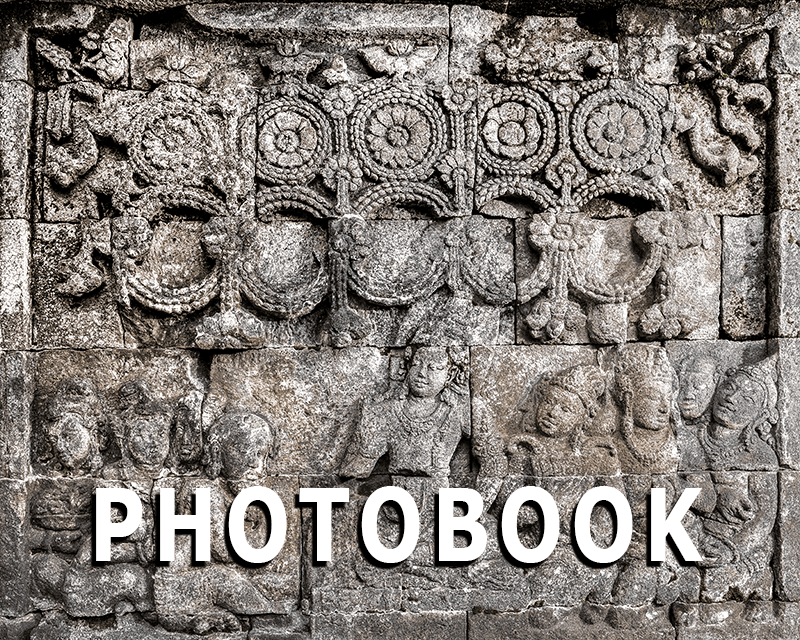
- Medialoka provides a comprehensive photo collection of Borobudur's 2,672 narrative relief panels, available to browse online or download as a free photobook.